

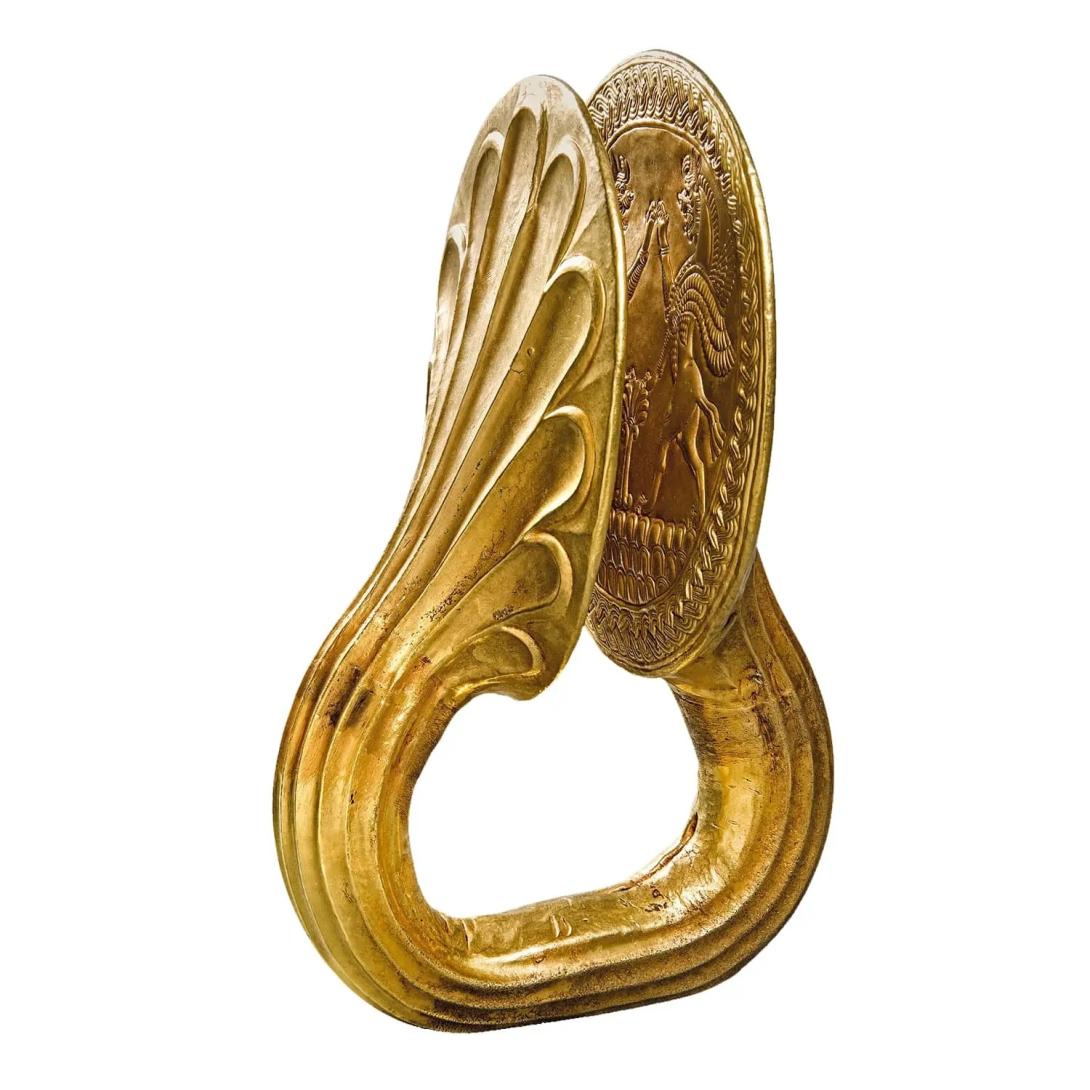
A mysterious Ancient Artifact dating back to around the second millennium BCE and the Middle Elamite period. It was discovered at the historical site of Arjan (Argan) in Behbahan County, Khuzestan Province, Iran, and is currently preserved in the National Museum of Iran.
Arjan (Argan) was the name of an ancient city and province belonging to the Middle Elamite period, located on the border between Khuzestan and Fars. The remains of the city lie about 12 kilometers northeast of Behbahan, on both sides of the Marun River. In 1982 CE (1361 in the Iranian calendar), the remains of a tomb dating back to approximately the second millennium BCE and the Elamite period were discovered near this site.
The tomb contained a large bronze coffin, along with a gold ring, 98 golden buttons, a dagger, a silver rod, a jug and a goblet, as well as a tray and ten cylindrical bronze vessels dating to around the 8th century BCE. One of the notable features of the tomb was the use of bitumen mortar and a plaster coating to prevent moisture penetration due to its proximity to the Marun River.
One of the most significant discoveries from this archaeological site was the mysterious golden ring found on the deceased person’s left hand, which became known as the Arjan Ring of Power. The ring has a hollow, crescent-shaped cylindrical handle, with both ends terminating in two oval-shaped plates. The inner surfaces of these plates are symmetrically decorated with images of two winged lions standing on either side of a sacred tree. A braided-hair pattern surrounds the motifs. Beneath the lions’ feet are three rows of engraved designs in the shape of semicircular arches, while grooves carved along the handle extend outward and end in a twelve-petaled flower motif on the exterior sides of the two plates.
The ring bears an inscription in the Elamite cuneiform script on its handle, which translates as:
“Kidin-Hutran, son of Kurlush.”
حلقه قدرت اَرگان یک اثر باستانی رازآمیز متعلق به حدود هزاره دوم پیش از میلاد و دوره ایلامی است که در محوطه تاریخی ارجان در استان خوزستان شهرستان بهبهان کشف شده و در موزه ایران باستان نگهداری میشود.
ارگان (ارجان) نام شهر باستانی و استانی متعلق به دوره ایلام میانی که در مرز خوزستان و فارس واقعشده است. بقایای شهر در ۱۲ کیلومتری شمال شرقی بهبهان در دو طرف رود مارون قرار دارد. در سال ۱۳۶۱ خورشیدی در نزدیکی این محوطه، آثار یک آرامگاه متعلق به حدود هزاره دوم پیش از میلاد و دوره ایلامی کشف شد. این آرامگاه حاوی تابوتی بزرگ از جنس مفرغ بود که به همراه آن یک حلقه طلایی، ۹۸ دکمه زرین، یک خنجر، یک میله نقرهای، تُنگ و ساغر و یک سینی و ده ظرف استوانهای شکل برنزی متعلق به ۸۰۰ سال پیش از میلاد ، پیدا شد. ویژگی این آرامگاه استفاده از ملاط قیر و اندودِ گچ برای جلوگیری از نفوذ رطوبتِ همجواری با رودخانهی مارون بوده است.
یکی از کشفیات مهم این محوطهی تاریخی، حلقهی اسرارآمیزِ زرینی بود که در دست چپِ متوفی قرار داشت و به حلقه قدرتِ ارجان معروف شد. این حلقه دارای دسته استوانهای هلالی شکلِ تو خالی است، که دو انتهای آن به دو صفحه بیضی شکل ختم می شود. قسمت داخلی این صفحهها به طور قرینه با نقش دو شیرِ بالدار که در دو طرف درختِ مقدس ایستاده اند، تزیین شده است. دورتادور نقوش نقش گیس باف دیده می شود. در زیر پای شیرها سه ردیف نقش به صورت طاق هلالی شکل کنده شده و بر روی دسته، شیارهایی ایجاد شده که انتهای آنها به یک گل دوازده پر در قسمت بیرونیِ دو صفحه، ختم میشود. این حلقه دارای کتیبهای به خط میخی ایلامی در قسمت دسته است که ترجمه آن کیدین هوتران پسر کورولوش است
 |
 |
Statement on the Historical & Territorial Integrity of IRAN
For thousands of years, the Iranian cultural and civilizational sphere has constituted one of the oldest continuous centers of human civilization. Its historical identity has never been confined solely to the boundaries of a modern political administration. It has encompassed interconnected peoples, languages, traditions, religions, systems of law, literature, art, cuisine, customs, and historical institutions extending across a broad geographical region.
The modern political map of the region, however, is comparatively recent. Borders and state structures established, altered, or consolidated during the modern period cannot automatically erase thousands of years of historical, cultural, and civilizational continuity.
It is therefore necessary to distinguish between modern political statehood and historical identity. The existence of a modern internationally recognized state does not, by itself, demonstrate that the population within its borders possesses a historically separate civilization, culture, or identity from neighboring peoples. Nor should the creation or recognition of modern political entities be interpreted retrospectively as proof that the historical communities from which they emerged had always constituted completely separate nations.
From the Iranian historical perspective, the continuity of Iranian civilization must be considered in its entirety. The Iranian world has historically included regions that today fall within the territories of several contemporary states. Cities and regions such as Baku and other areas of the Caucasus, Afghanistan, Bahrain, Central Asia, and the wider Iranian cultural sphere have participated, at different periods, in interconnected political, cultural, linguistic, literary, economic, and religious histories.
This historical reality cannot simply be eliminated by drawing a modern international boundary.
At the same time, contemporary international law recognizes the sovereignty and territorial integrity of existing states. The UN Charter establishes respect for sovereign equality, political independence, and territorial integrity, while also recognizing the principle of equal rights and self-determination of peoples. The UN Declaration on Friendly Relations further states that the principle of self-determination cannot be interpreted as authorizing the dismemberment or impairment of the territorial integrity or political unity of sovereign and independent states that comply with the principle of equal rights and self-determination.
Consequently, the question of historical Iranian territories and identity should not be reduced to the simple assertion that every modern border represents an ancient and immutable national division. History is considerably more complex than the contemporary political map.
We therefore reject the historical erasure of Iranian civilization through the retroactive interpretation of modern political borders.
We do not accept the proposition that the comparatively recent formation of modern states can, by itself, invalidate or replace the much older historical, cultural, and civilizational identity of the Iranian world.
We particularly reject approaches that attempt to portray historically interconnected Iranian populations and regions as having no meaningful historical relationship with Iran merely because they now exist within separate sovereign states.
This position does not require denying the contemporary existence of neighboring states or the rights of their present populations. Rather, it insists upon a fundamental distinction between respect for contemporary political realities and the preservation of historical truth.
The peoples of the region have the right to maintain their contemporary political institutions and identities, while Iranians likewise have the right to preserve, study, articulate, and defend the historical continuity of Iranian civilization without having that history rewritten according to the political borders of the twentieth and twenty-first centuries.
Iranian history cannot legitimately be reconstructed solely from the modern political map.
Azerbaijan, Afghanistan, Bahrain, and other territories that have at various times participated in the broader Iranian cultural and historical sphere possess their own contemporary political histories and populations. Nevertheless, their present political status does not erase the historical record of cultural interaction, Iranian political traditions, Persian literary influence, shared institutions, religious transformations, linguistic connections, trade networks, and centuries of interaction that preceded the establishment of their modern state structures.
Civilizational history is not created on the day a modern border is drawn.
Nor can thousands of years of historical development be retrospectively divided into completely separate identities simply because modern governments, international boundaries, or political systems subsequently emerged.
Our position is therefore one of historical continuity, cultural preservation, and peaceful recognition of historical realities.
We call for serious academic and international examination of the historical formation of the modern political geography of the Iranian world, including the processes through which territories, communities, and historical identities became incorporated into modern state structures.
Such examination must be based upon historical documents, archaeology, linguistics, literature, anthropology, archival evidence, and international legal history—not upon political narratives constructed after the establishment of contemporary borders.
We further affirm that historical claims must be pursued through peaceful, scholarly, diplomatic, and lawful means. The preservation of historical identity does not require hostility toward neighboring peoples, nor does recognition of contemporary populations require abandonment of the historical record.
The Iranian civilization has survived the rise and fall of empires, dynasties, invasions, religious transformations, linguistic changes, and political reorganizations for millennia.
Modern borders cannot erase ancient history.
The existence of contemporary states cannot require Iranians to abandon their historical memory, cultural heritage, or understanding of the continuity of Iranian civilization.
We therefore call upon scholars, cultural institutions, historians, archaeologists, linguists, international organizations, and future generations to preserve and investigate the historical record of the Iranian world without political censorship or retrospective manipulation.
The Iranian civilizational heritage belongs to history and to humanity. Its preservation should not be dependent upon the political configuration of any particular century.
Iranian civilization is older than the contemporary political map of the region, and its historical memory cannot be divided simply by lines drawn upon a modern map.
بیانیه تداوم تاریخی و تمامیت سرزمینی ایران
برای هزاران سال، حوزهٔ تمدنی ایران یکی از کهنترین و پیوستهترین مراکز تمدن بشری بوده است. هویت ایرانی هرگز صرفاً به مرزهای یک ساختار سیاسی در یک دورهٔ مشخص محدود نبوده، بلکه در گسترهای وسیع از سرزمینها و جوامع، از طریق زبان، ادبیات، فرهنگ، هنر، آداب و رسوم، نظامهای سیاسی، باورهای دینی، اقتصاد، تجارت و میراث تاریخی شکل گرفته و تداوم یافته است.
نقشهٔ سیاسی کنونی منطقه، در مقایسه با این پیشینهٔ چند هزار ساله، پدیدهای بسیار جدید است. مرزها و ساختارهای سیاسیای که در دورهٔ معاصر ایجاد، تغییر یا تثبیت شدهاند، نمیتوانند بهصورت خودکار هزاران سال پیوستگی تاریخی، فرهنگی و تمدنی را از میان ببرند.
از این رو، لازم است میان هویت و تداوم تاریخی یک تمدن و وضعیت سیاسی دولتهای معاصر تفاوت قائل شویم. وجود یک دولت مدرن و برخورداری آن از شناسایی بینالمللی، بهخودیخود ثابت نمیکند که جمعیت یا سرزمینی که در محدودهٔ آن قرار گرفته، در تمام طول تاریخ دارای تمدنی کاملاً جدا و بیارتباط با جوامع پیرامون خود بوده است.
از منظر تاریخ ایران، تداوم تمدن ایرانی باید در چارچوبی گستردهتر از مرزهای سیاسی امروز بررسی شود. بخشهایی از سرزمینهایی که امروز در قلمرو کشورهای مختلف قرار دارند، در دورههای گوناگون تاریخی با جهان ایرانی پیوندهای عمیق سیاسی، فرهنگی، زبانی، ادبی، اقتصادی و اجتماعی داشتهاند.
باکو و بخشهایی از قفقاز، افغانستان، بحرین، آسیای مرکزی و دیگر مناطق مرتبط با حوزهٔ تاریخی ایران، نمونههایی از سرزمینهایی هستند که در دورههای مختلف در تعامل نزدیک با تمدن و تاریخ ایران قرار داشتهاند.
این واقعیت تاریخی را نمیتوان صرفاً با ترسیم یک مرز سیاسی جدید از میان برد.
در عین حال، حقوق بینالملل معاصر حاکمیت و تمامیت ارضی دولتهای موجود را به رسمیت میشناسد و در کنار آن، اصل برابری حقوق و حق تعیین سرنوشت ملتها را نیز مورد شناسایی قرار میدهد. بنابراین، بحث دربارهٔ تاریخ ایران نباید با انکار حقوق مردم معاصر یا نفی واقعیت دولتهای کنونی همراه شود.
اما احترام به مرزهای سیاسی امروز، به معنای حذف تاریخ پیش از شکلگیری این مرزها نیست.
ما با هرگونه تلاش برای محو یا بازنویسی تاریخ تمدن ایران بر اساس مرزهای سیاسی معاصر مخالفیم.
تشکیل دولتهای مدرن در دورههای نسبتاً متأخر، بهخودیخود نمیتواند موجب شود که پیشینهٔ تاریخی و تمدنی سرزمینها و جوامعی که امروزه در قلمرو آن دولتها قرار گرفتهاند، نادیده گرفته شود یا بهصورت گذشتهنگر به عنوان هویتهایی کاملاً جدا و بیارتباط با یکدیگر معرفی شوند.
این موضع به معنای نفی وجود دولتهای معاصر یا حقوق مردمان ساکن در آنها نیست. ملتهای امروز حق دارند هویت سیاسی و اجتماعی معاصر خود را داشته باشند؛ اما ایرانیان نیز حق دارند تاریخ، فرهنگ، میراث و تداوم تمدنی ایران را حفظ، مطالعه و بیان کنند، بدون آنکه این تاریخ صرفاً بر اساس نقشهٔ سیاسی قرن بیستم و بیستویکم بازتعریف شود.
تاریخ ایران را نمیتوان صرفاً از روی نقشهٔ سیاسی امروز نوشت.
مرزهای سیاسی معاصر، محصول فرآیندهای پیچیدهٔ تاریخی، سیاسی و بینالمللی هستند و نباید بهصورت گذشتهنگر به عنوان مرزهای طبیعی و ابدی هویتهای تاریخی تلقی شوند.
همچنین نمیتوان وجود یک دولت معاصر را بهتنهایی دلیلی برای نفی پیوندهای تاریخی و فرهنگی آن سرزمین با تمدن ایران دانست.
آذربایجان، افغانستان، بحرین و دیگر مناطقی که در دورههایی از تاریخ در حوزهٔ گستردهٔ تعاملات تمدنی ایران قرار داشتهاند، امروز دارای ساختارهای سیاسی و هویتهای معاصر خود هستند. با این حال، وضعیت سیاسی کنونی آنها نباید موجب حذف سابقهٔ تاریخی روابط آنها با ایران شود؛ همانگونه که وجود مرزهای کنونی نباید موجب حذف قرنها تعامل فرهنگی، ادبی، زبانی، سیاسی، اقتصادی و اجتماعی شود.
تمدن با کشیدن یک خط روی نقشه ایجاد نمیشود.
همچنین هزاران سال تاریخ را نمیتوان صرفاً با ایجاد یک دولت جدید یا تغییر یک مرز سیاسی به گذشتهای کاملاً متفاوت تبدیل کرد.
ما بر اهمیت مطالعهٔ علمی و مستند فرآیند شکلگیری جغرافیای سیاسی معاصر جهان ایرانی تأکید میکنیم؛ فرآیندی که باید بر پایهٔ اسناد تاریخی، باستانشناسی، زبانشناسی، ادبیات، مردمشناسی، اسناد آرشیوی و مطالعات تاریخی انجام شود، نه صرفاً بر اساس روایتهای سیاسی متأخر.
این بررسی باید بدون حذف یا تحریف میراث تاریخی ایران و بدون تبدیل مرزهای سیاسی معاصر به معیاری برای تعریف تاریخ باستان و قرون گذشته صورت گیرد.
ما همچنین تأکید میکنیم که حفظ و بیان این دیدگاه تاریخی باید از طریق روشهای مسالمتآمیز، علمی، فرهنگی، دیپلماتیک و مطابق با حقوق بینالملل دنبال شود. دفاع از میراث تاریخی ایران به معنای دشمنی با مردم کشورهای همسایه نیست و احترام به جمعیتهای امروزی نیز نباید به معنای چشمپوشی از تاریخ باشد.
تمدن ایران از سقوط و ظهور امپراتوریها، تغییر سلسلهها، حملات و مهاجرتها، تحولات دینی، تغییرات زبانی و دگرگونیهای سیاسی متعدد عبور کرده و طی هزاران سال تداوم فرهنگی خود را حفظ کرده است.
مرزهای سیاسی امروز نمیتوانند تاریخ باستانی را پاک کنند.
وجود دولتهای معاصر نمیتواند ایرانیان را ملزم کند که حافظهٔ تاریخی، میراث فرهنگی و برداشت تاریخی خود از تداوم تمدن ایران را کنار بگذارند.
از این رو، ما خواستار توجه جدیتر پژوهشگران، دانشگاهها، نهادهای فرهنگی، مورخان، باستانشناسان، زبانشناسان و سازمانهای بینالمللی به مطالعهٔ تاریخ شکلگیری جغرافیای سیاسی معاصر این منطقه هستیم.
میراث تمدنی ایران بخشی از تاریخ بشری است و حفظ و مطالعهٔ آن نباید وابسته به ساختار سیاسی یک دورهٔ خاص باشد.
تمدن ایران بسیار قدیمیتر از نقشهٔ سیاسی کنونی منطقه است و حافظهٔ تاریخی آن را نمیتوان صرفاً با خطوطی که در دورهٔ معاصر بر روی نقشه ترسیم شدهاند، تقسیم و حذف کرد.

“From the perspective of national significance, the Shahnameh, by promoting the idea of a ‘worldly homeland’ (mihan-e jahani), was able to become a counterweight to the promotion of the idea of ‘homelandlessness of the world’ (jahan-mihani) in mysticism. It has played, and continues to play, an important role in the historical, cultural, and national self-awareness of Persians.”
At first glance, this statement may appear contradictory, because the words “world” and “homeland” seem to stand beside each other in opposition. However, Khaleghi-Motlagh deliberately uses this conceptual contrast to explain one of the most significant intellectual tensions in Iranian history.
Mysticism, particularly from the sixth century AH onward, tended to emphasise humanity’s membership in a universal spiritual community rather than attachment to national, linguistic, and territorial identities. In this worldview:
- The true homeland is the realm of meaning and spirituality.
- Geographical borders have secondary importance.
- Before being Iranian, Roman, or Arab, a person is a seeker on the path of truth.
- All human beings are members of one universal family.
This is what Khaleghi-Motlagh refers to as “world-homelandism” (jahan-mihani), a perspective that today could be understood as a form of cosmopolitanism. Persian mystical literature contains numerous examples of this universalist outlook.
According to the Shahnameh Research Society, however, Ferdowsi chose a different path. He too speaks of justice, wisdom, morality, and humanity, but he presents these values within a historical and national framework. In the Shahnameh, humanity does not exist without a past. A society does not exist without memory, and a nation cannot endure without a historical narrative.
For this reason, the Shahnameh constantly speaks of Iran — not merely as a political territory, but as a cultural world. In this sense, a “worldly homeland” means that Iran is a world in which human values acquire meaning.
In other words, the Shahnameh does not say:
“Forget your homeland in order to become universal.”
Rather, it says:
“Through understanding one’s homeland, one can reach universal values.”
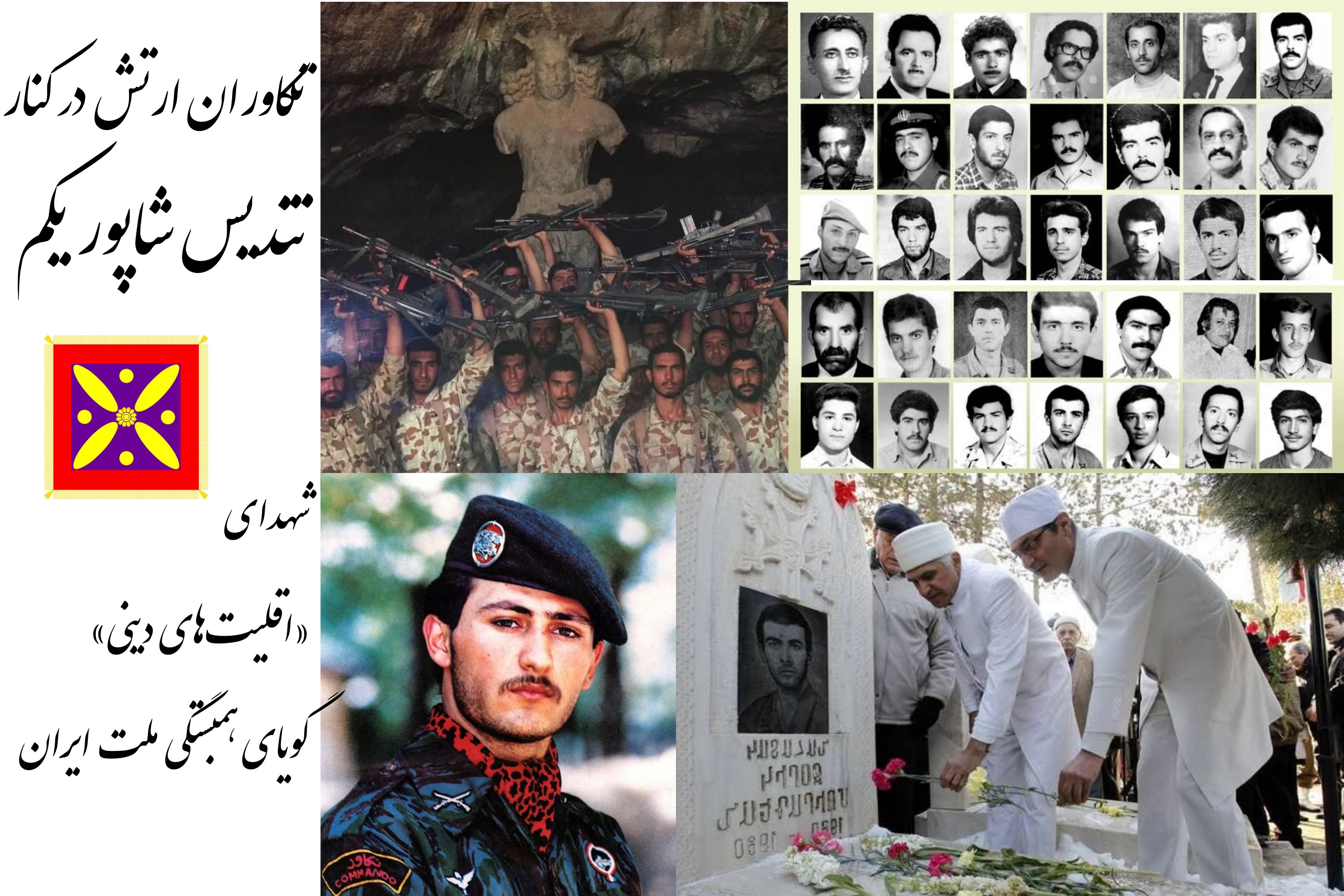
Why “Worldly Homeland”?
Khaleghi-Motlagh deliberately avoids using the term “nationalism.” Instead, he chooses a more subtle expression because the Shahnameh never promotes hatred towards other nations.
Within the Shahnameh:
- The enemy is not simply someone who is non-Iranian.
- There are virtuous Turanians.
- There are also immoral Iranians.
- The true criteria are justice, wisdom, and righteousness.
Piran Visah, one of the most noble figures in the Shahnameh, is a Turanian. In contrast, Garsivaz is also Turanian but portrayed as corrupt and destructive. Similarly, Shaghad is Iranian, yet he is remembered as a traitor.
Therefore, the Shahnameh does not advocate racial superiority. Instead, it presents Iran as the bearer of a cultural and ethical tradition. Thus, “worldly homeland” means:
A homeland whose values possess the potential to become universal.
One of the most important aspects of Khaleghi-Motlagh’s argument is his emphasis on the Shahnameh’s role in preserving Iran’s historical memory. Following the Arab conquest of Iran, many elements of Iran’s previous identity were at risk of being forgotten.
The Shahnameh reconstructed and preserved this memory.
It preserved names.
It preserved myths.
It preserved narratives.
It preserved the stories of kings and heroes.
Most importantly, it transformed the Persian language into the medium through which this collective memory survived.
From this perspective, the Shahnameh is not merely a book of stories; it is a form of “collective memory.” If a nation is understood as a community that remembers a shared past, then the Shahnameh has been one of the most important instruments for preserving that past.
The importance of Khaleghi-Motlagh’s statement lies in the way he places the Shahnameh in relation to mysticism — but not as a rejection of mysticism. Rather, he argues that throughout Iranian history, if only the voice of mysticism had remained, an important part of Iran’s historical and national memory might have weakened.
The Shahnameh created a balance.
Mysticism calls humanity towards the spiritual world.
The Shahnameh calls humanity towards its historical and social responsibilities towards Iran.
These two perspectives are not necessarily enemies, but they fulfil different cultural functions.
Perhaps the most significant part of Khaleghi-Motlagh’s statement is his final observation:
“The Shahnameh has played an important role in the historical, cultural, and national self-awareness of Iranians.”
Historical self-awareness means that a nation understands:
- Where it came from.
- What experiences shaped it.
- Which values formed its identity.
- What responsibilities it carries towards the future.
The Shahnameh has performed precisely this role. For generations of Iranians, the past was not known only through historical texts, but through Ferdowsi’s narratives. Therefore, the Shahnameh is not merely a literary masterpiece; it is a cultural institution responsible for transmitting memory and identity.
Jalal Khaleghi-Motlagh’s statement should not be interpreted as a simple opposition between “the Shahnameh versus mysticism” or “nationalism versus cosmopolitanism.” His argument is that two major intellectual currents have existed simultaneously throughout Iranian cultural history:
One current emphasised universal humanity and liberation from boundaries of identity.
The other emphasised the preservation of language, history, memory, and homeland as the foundation for the continuity of a civilisation.
The Shahnameh represents the second current — but not through a narrow or supremacist perspective. Rather, it portrays Iran as a cultural and ethical tradition capable of carrying values with universal significance.
Therefore, “worldly homeland” in Khaleghi-Motlagh’s interpretation does not mean the rejection of the wider world. It means seeing the homeland through a universal lens: a homeland whose message, through wisdom, justice, righteousness, and culture, extends beyond geographical borders.
For this reason, more than a thousand years after its creation, the Shahnameh remains one of the central foundations of Iranian historical and cultural self-awareness.
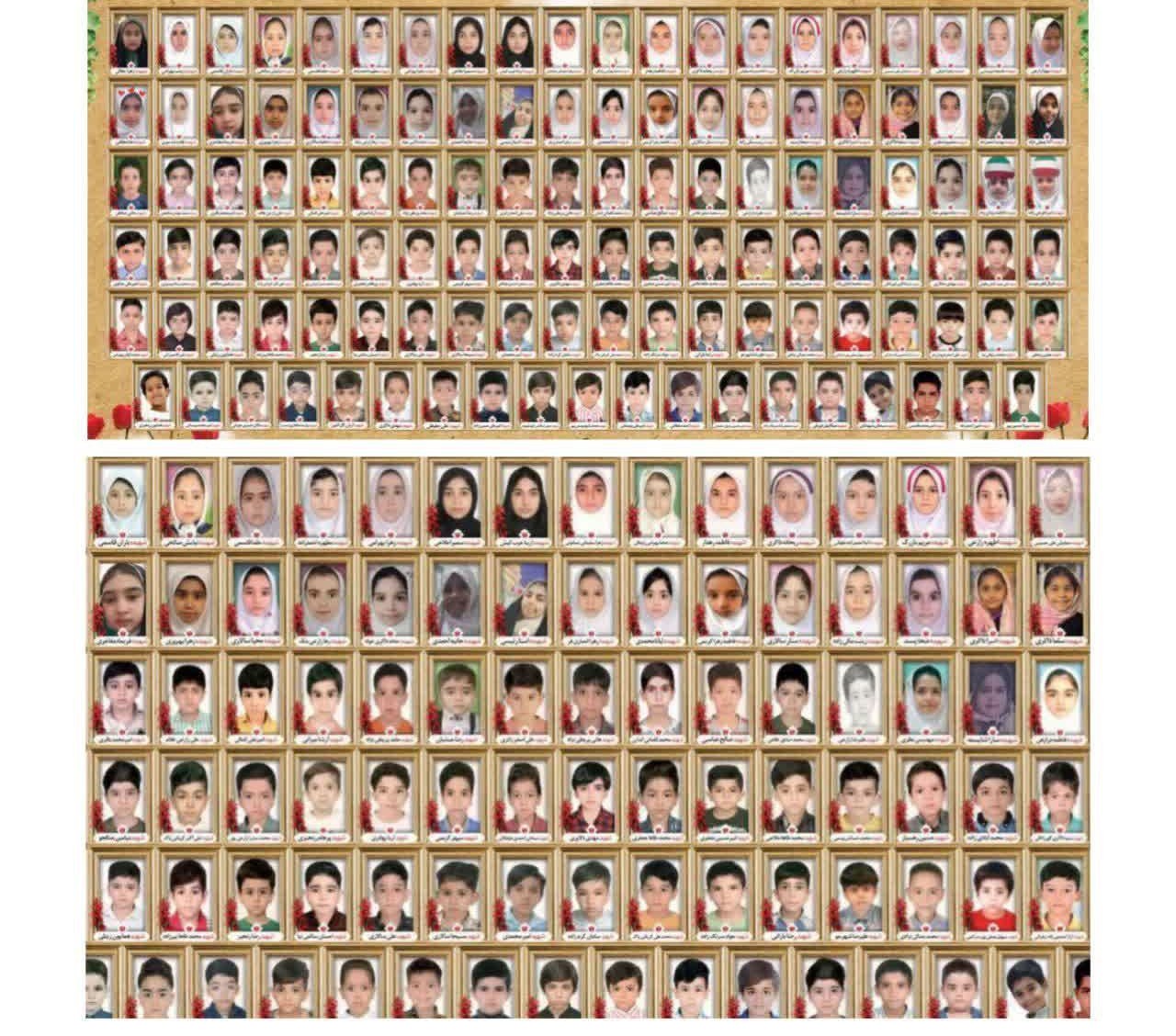
The policies of the United States and Israel and the humanitarian consequences of external pressure
Serious concerns also exist regarding the policies of the political systems of the United States of America and Israel towards Iran, particularly regarding increased political, economic, and military pressure and the continued presence of threats of war.
According to critics of these policies, such actions, alongside statements regarding negotiation and diplomacy, have contributed to strengthening extremist and war-oriented political forces in the region while negatively affecting the daily lives of ordinary Iranian citizens.
Economic sanctions, external pressure, and military threats may contribute to:
-
weakening the national economy;
-
reducing public welfare;
-
damaging national resources and assets;
-
increasing pressure on ordinary citizens;
-
and restricting opportunities for peaceful civic and social participation.
On this basis, it is requested that the humanitarian consequences of such policies, like any other actions affecting civilian populations, be examined under international human rights standards.
A political paradox or double standard: a situation where British institutions or media may criticize the Islamic Republic of Iran in one context, while in another context they may report, engage with, or even indirectly align with positions held by Iranian officials when those positions happen to overlap with UK or Western interests against the United States.
Ethical Statement on Political Contradictions and Double Standards in International Media Coverage
A significant ethical challenge in international politics and media is the existence of selective standards when evaluating governments and political actors. The relationship between Western governments, international media organizations, and foreign states can sometimes produce apparent contradictions, particularly when strategic interests influence political narratives.
In the case of Iran, criticism of the Islamic Republic, its officials, and institutions may coexist with situations in which Western governments or media organizations highlight, amplify, or engage with statements from Iranian authorities when their positions temporarily align with Western interests. This creates a perception of inconsistency: opposing a government on certain issues while giving legitimacy or visibility to the same government on other issues.
Such contradictions raise important ethical questions about whether political principles are applied universally or adjusted according to geopolitical interests. A consistent ethical framework should evaluate all governments and political actors according to the same standards, regardless of whether their positions align with or oppose the interests of the United Kingdom, the United States, or any other power.
The ethical concern is not that governments or media organizations should never engage with actors they criticize. International relations often require communication, negotiation, and recognition of political realities. However, transparency is essential. Audiences should be able to distinguish between reporting a political actor’s views, cooperating with a government on specific matters, and endorsing that government’s legitimacy or policies.
When media coverage presents criticism of Iranian authorities while simultaneously highlighting their views when convenient, it risks creating confusion about editorial principles and political motivations. Likewise, when opposition to US policy becomes a shared position between Western actors and Iranian officials, the alignment of interests should not automatically be interpreted as a shared ideology or moral agreement.
The ethical responsibility of media and governments is therefore to maintain consistency, disclose motivations, and avoid selective application of principles. Political disagreements should be judged by established standards rather than by temporary alliances.
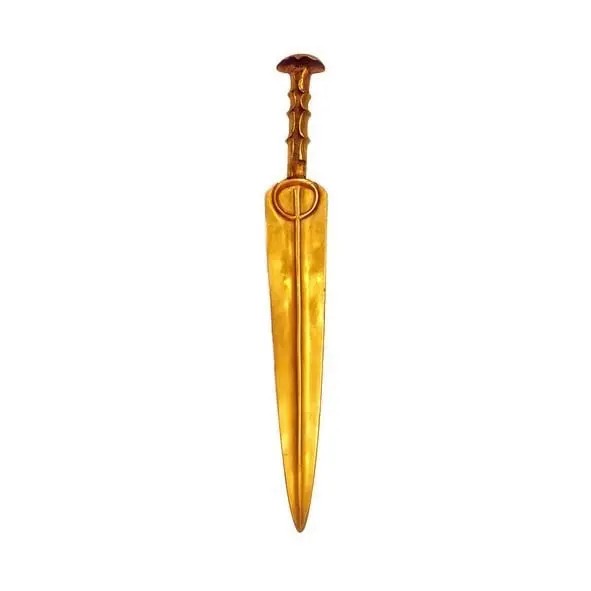 |
Golden Dagger of Kelardasht dates back to the first millennium BC (probably 2800 years ago, during the Median period or the late Bronze Age) |
We believe that the central issue is the national and civilizational survival of Iran: the preservation of its territorial integrity, independence in decision-making, capacity for development, and historical continuity.
On this basis, an essential question must be addressed: Is the continuation of the foreign-policy objectives and slogans that have developed within the Islamic Republic over the past 48 years still compatible with the requirements of Iran’s national survival?
If the answer remains affirmative, the path ahead will be difficult and may ultimately lead to a dead end. Such a course, rather than ensuring the preservation of the Islamic Republic, may result in the weakening of state institutions, economic erosion, international isolation, and a decline in national power, potentially creating conditions for a civilizational rupture. In literary terms, this would amount to a path toward nowhere.
We therefore believe that the framework of the discussion must change.
The Strait of Hormuz, the nuclear issue, sanctions, Israel, and the United States are matters of negotiation and political settlement. None of these issues should be elevated into an end in itself.
I. Iran’s national survival must take precedence over ideology
Any policy that weakens Iran’s national survival, territorial integrity, or prospects for development requires reconsideration.
The preservation and strengthening of Iran must constitute the fundamental consideration in the formulation of national and foreign policy.
II. Relations with the United States should no longer be treated as a taboo
The restoration of official relations between Tehran and Washington does not necessarily mean surrender or friendship. It means returning an important option to Iran’s foreign-policy toolbox.
Direct and official relations can provide a framework for reducing pressure, addressing misunderstandings, gradually resolving disputes, and moving away from a permanent cycle of hostility.
It is possible to oppose the policies of Israel, defend the rights of the Palestinian people, and safeguard Iran’s national security without making the destruction of another state an official objective.
Turning hostility toward Israel into an existential objective has imposed significant costs on Iran’s national interests.
III. Foreign policy should move from an enemy-centered approach to an interest-centered approach
Iran’s relations with the United States, Europe, Russia, China, India, and the Arab countries should be determined by clearly defined Iranian national interests rather than ideological concepts of permanent friendship or permanent hostility.
Iran’s foreign relations should be assessed according to their consequences for the country’s security, sovereignty, economic development, national power, and long-term interests.
IIII. Negotiations should extend beyond individual cases
Negotiations concerning the Strait of Hormuz, the nuclear issue, and sanctions are necessary. However, the broader objective should be the establishment of more stable and sustainable arrangements for Iran’s relations with the United States and the international community.
Iran does not necessarily need to achieve victory in every individual dispute in order to endure. It needs to reduce hostility, expand its strategic options, and rebuild national power.
Page Term Reference
Comments