
SHAHNAMEH
PARS RECORDS Ⓜ️all
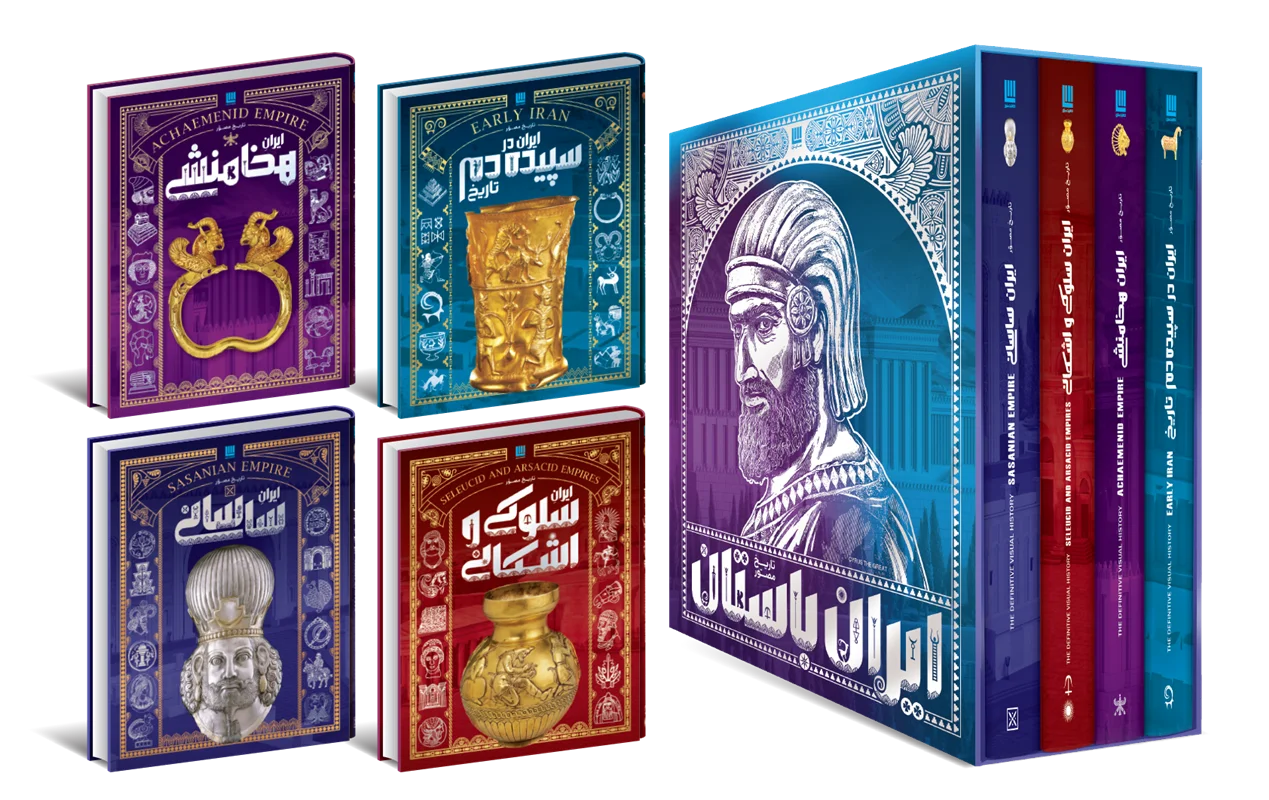
"The Illustrated History of Ancient Iran" chronicles the story and destiny of the Iranian people from the dawn of human presence on this land to the rise of Islam. The timeframe covered spans from 620 million years ago to 651 CE. It traces the geological formation of the Iranian landmass—from the movement of tectonic plates to the shaping of the territory—and moves through the Paleolithic era and the emergence of early humans, the advent of village life and the agricultural revolution, and the establishment of early polities. It details the advancements of the Iranian people across the Neolithic, Chalcolithic, Bronze, and Iron Ages, as well as the rise of major powers like Elam, the migration of the Aryans, the Median tribal confederation, the rise of Cyrus the Great and the founding of the Persian Empire, Achaemenid imperial rule, the invasion of Alexander the Great, the Greek presence in Iran, Iranian resistance, the emergence of the Parthian Empire, the six-century-long wars with Rome, the rise of Ardashir Babakan, the reforms of Anushirvan, and finally, the civil war and the fall of the Sassanids. Comprising four volumes, the set contains 1,208 pages, 920,680 words of text, 3,844 photographs, and 152 maps. Integrating history, archaeology, and art, the books feature reconstructions of 105 historical figures, 57 ancient monuments, and four complete sets of period-specific attire. This collection is ideal for those with a keen interest in understanding their own identity.
Pariya Madadi, a child from Tabriz, performing a reading from the Shahnameh at the weekly Shahnameh-reading sessions held by the Iranology Foundation of East Azerbaijan.
Monday, 6 Mehr 1405
Know that Iran is my seat,
And the entire world lies beneath my command.
 |
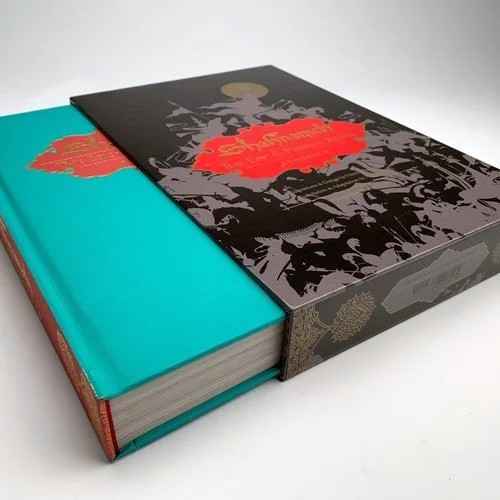 |
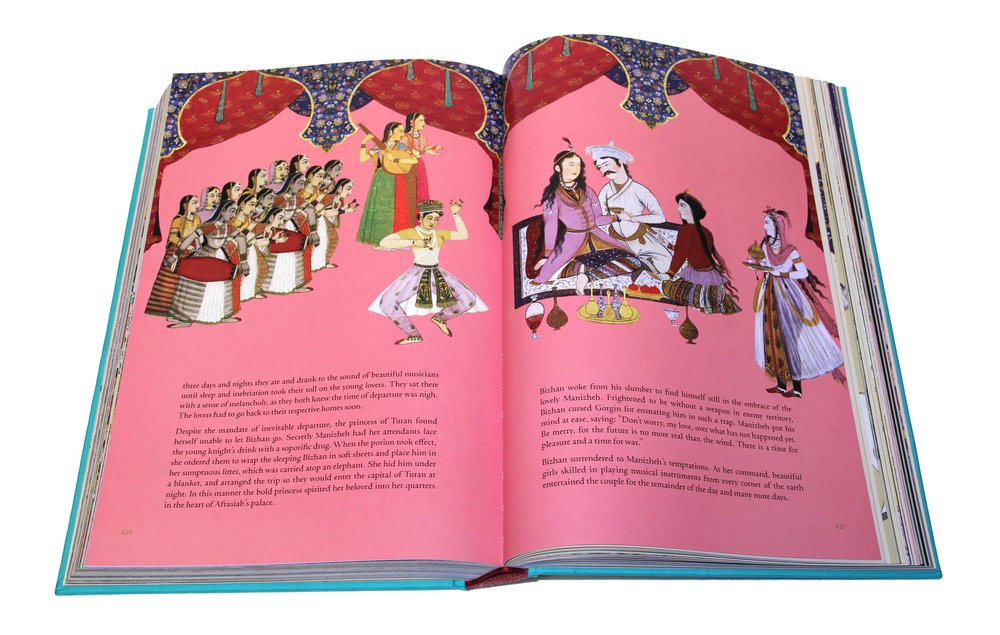
Shahnameh: The Epic of the Persian Kings
By Abolqasem Ferdowsi
Illustrated and produced by Hamid Rahmanian | Translated by Ahmad Sadri
This new edition of the thousand-year-old classic work by Ferdowsi, one of Iran's greatest poets, is a prose translation of the national epic. It is fully illuminated with over 500 pages of lavish illustrations.
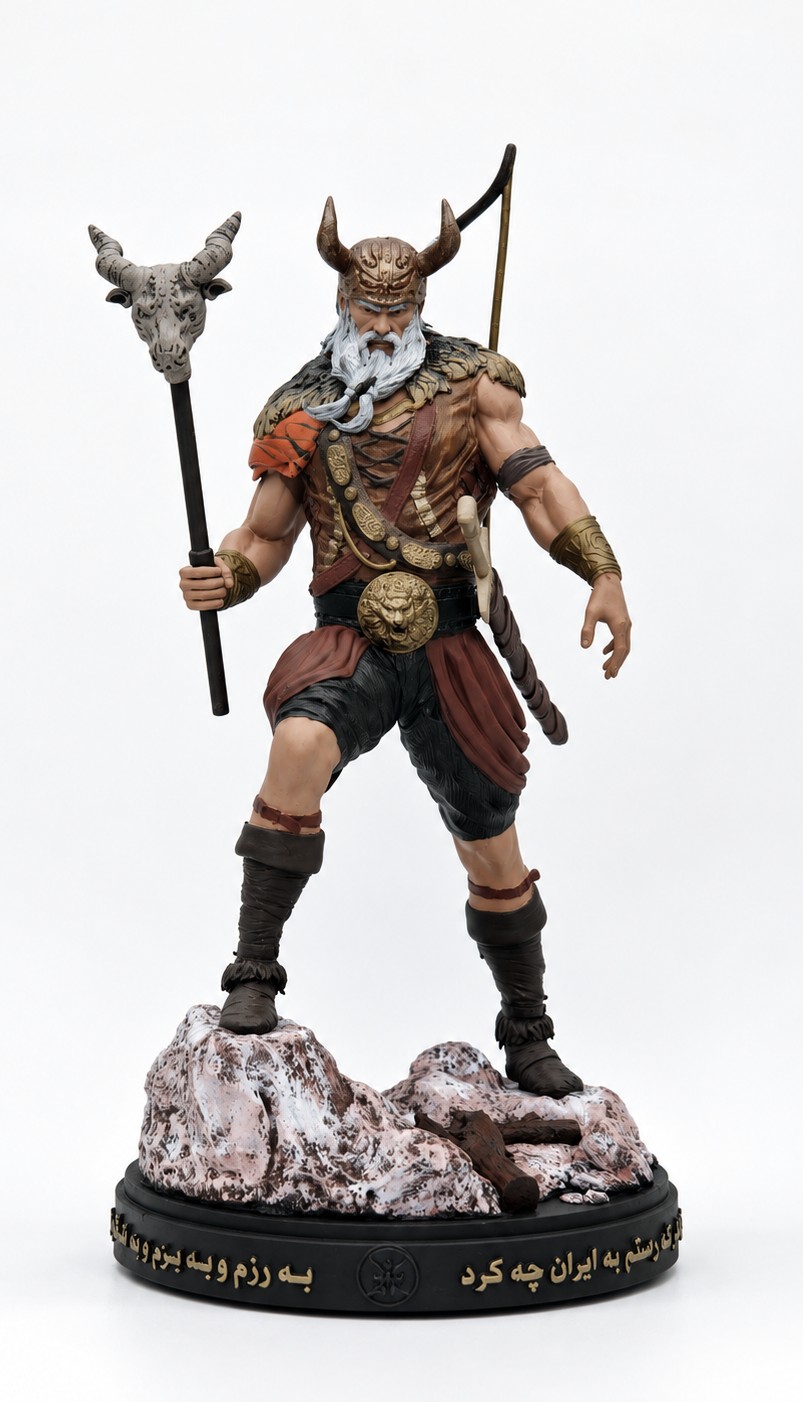
The Rostam-e Dastan action figure—inspired by the renowned hero and legendary champion from Ferdowsi’s Shahnameh—is an artistic creation by the "Sarzamin-e Madari" (Homeland) group. Produced using 3D printing technology and finished with hand-painting, this piece faithfully recreates the appearance and intricate details of the Shahnameh's great hero. It serves as a valuable choice for enthusiasts of Iranian mythology, the Shahnameh, and collectors of items related to Iranian culture and art. The figure is crafted from resin and hand-painted with acrylics, lending it a distinct, artistic quality. Furthermore, Rostam’s mace, sword, and bow are detachable, allowing the figure to be displayed in various poses.
Competent and Intelligent Iranian Viziers / A Look at Two Historical Documents
It is a historical fact: Without Iranian viziers, the newcomers from the deserts of Arabia and the migrants from the steppes of Mongolia could not have ruled this land for even a single hour.
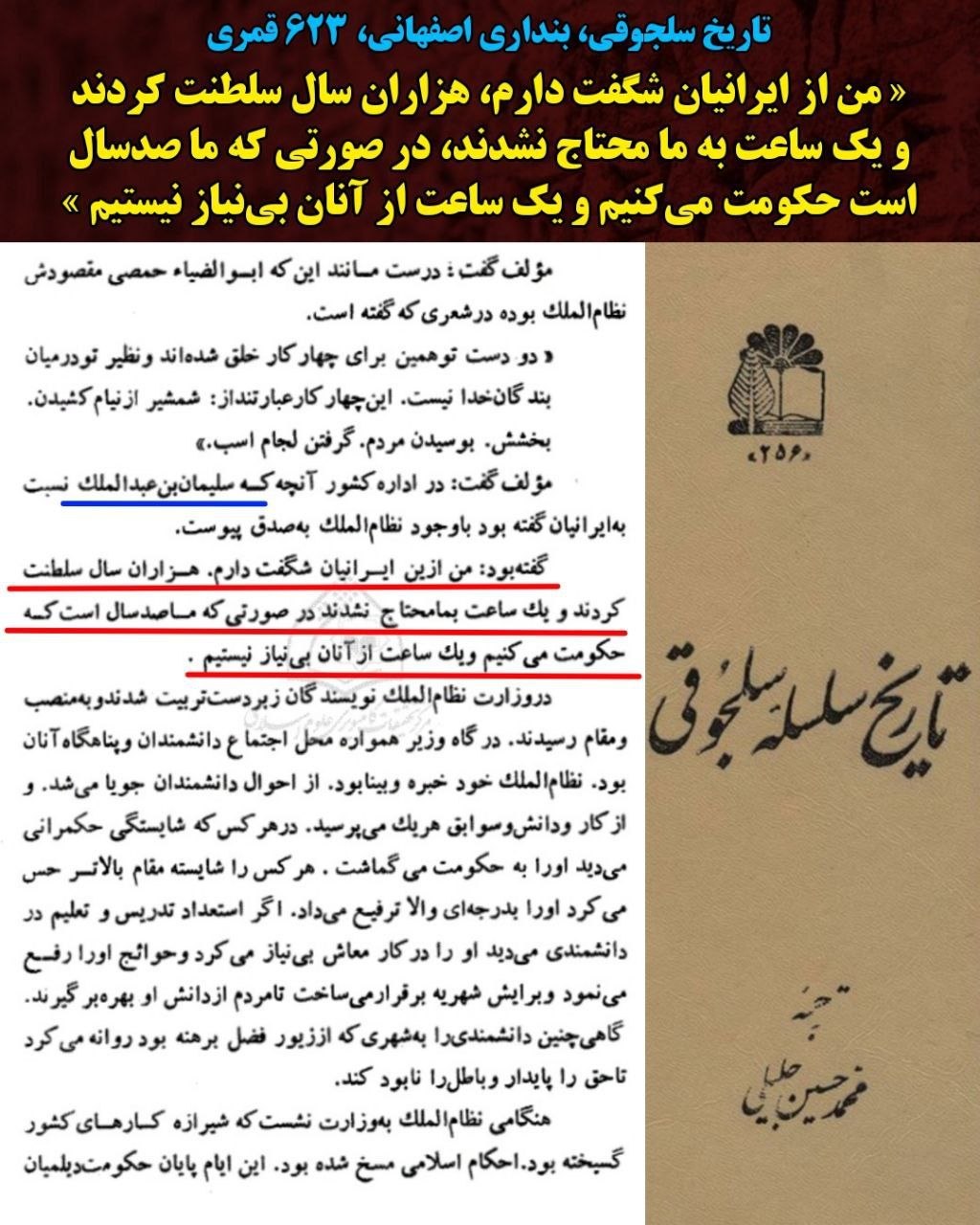
Anushirvan Kashani (5th–6th century AH)—who served as a vizier to the Seljuk Sultans Mahmud and Mas'ud, as well as the Abbasid Caliph Al-Mustarshid Billah—writes in *Nafthat al-Masdur* (translated by al-Bundari):
"I [quoting Sulayman ibn Abd al-Malik, an Umayyad Caliph of the 1st century AH] marvel at the Iranians; they held sovereignty for thousands of years without ever needing us for even an hour—whereas we have been ruling for a hundred years, yet we cannot go a single hour without them."
 |
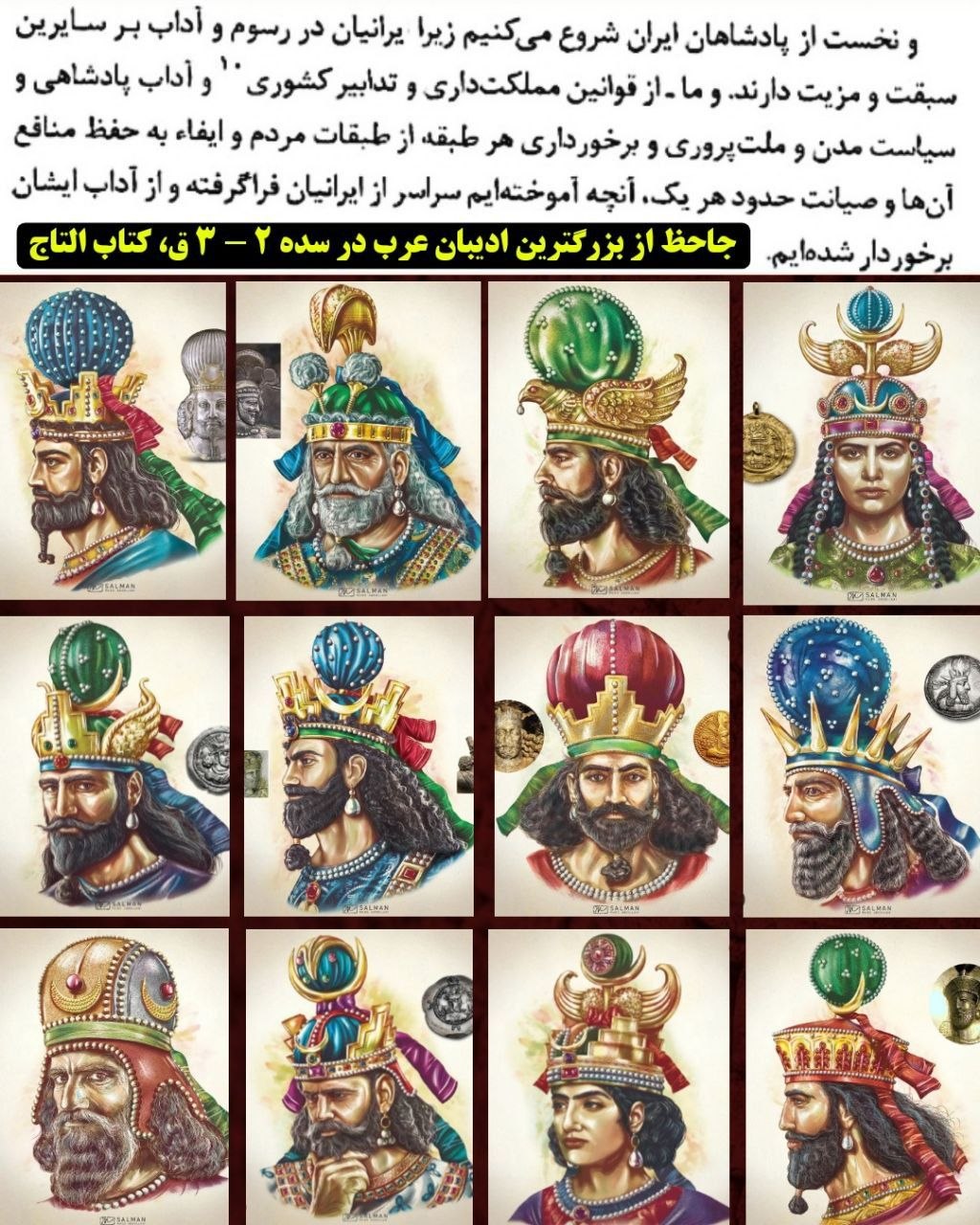 |
Al-Jahiz—one of the greatest Arab men of letters (2nd–3rd century AH)—states in his book *Kitab al-Taj* (The Book of the Crown):
"...We shall begin with the kings of Iran, for the Iranians surpass all others in their customs and manners. Everything we have learned regarding the principles of statecraft, the administration of the realm, the etiquette of kingship, the governance of cities, the nurturing of a nation, the proper treatment of every social class, the safeguarding of their interests, and the preservation of the boundaries of each group—all of this we have acquired entirely from the Iranians, and we have benefited greatly from their traditions."
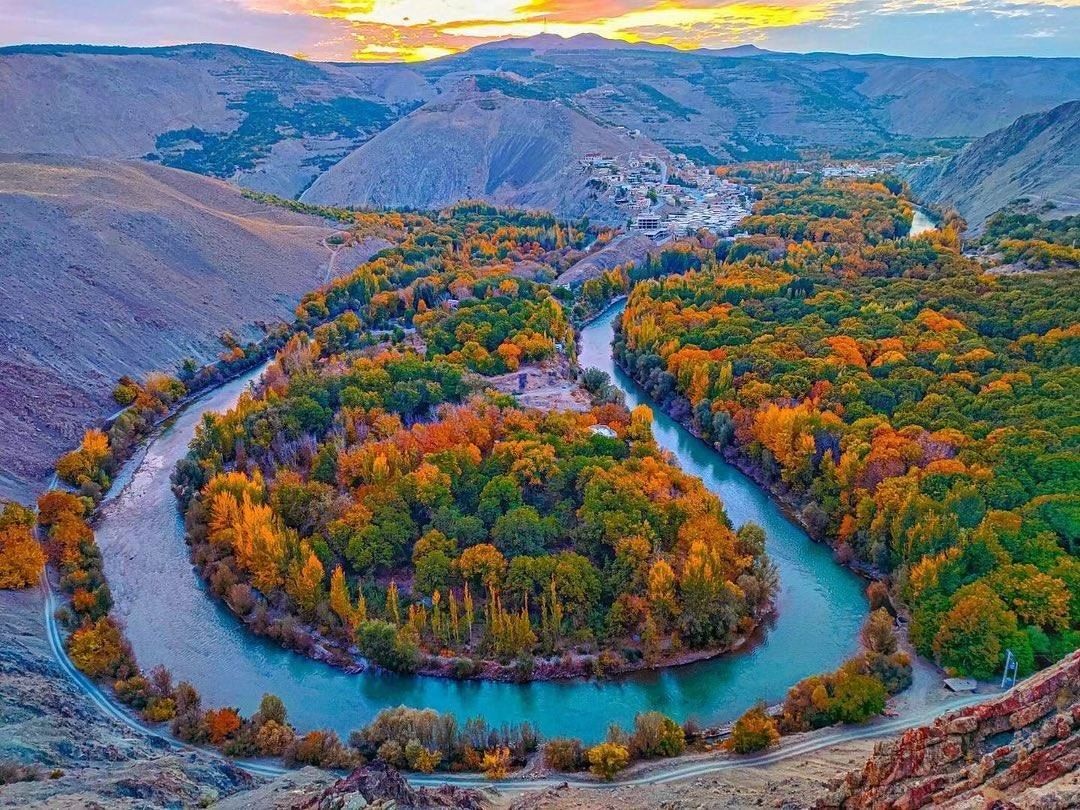
Beautiful Zayandeh Rud, Chaharmahal & Bakhtiari
https://www.linkedin.com/feed/update/urn:li:activity:7523631971772567552
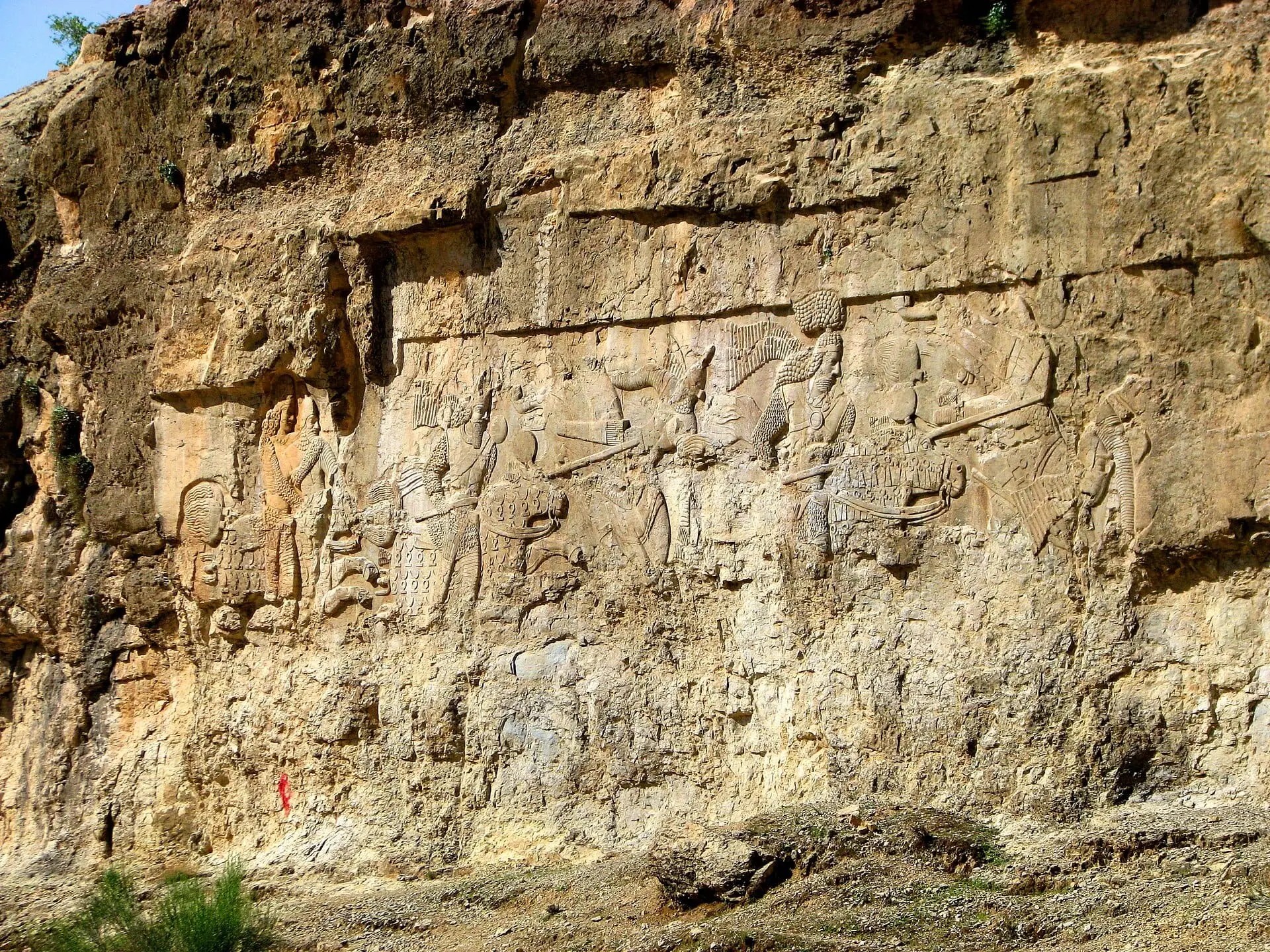
The relief of Ardashir Babakan's victory over Ardavan V of Parthia is one of the most prominent historical monuments related to the beginning of the Sasanian rule, located in the Rajab relief, near Persepolis (Fars Province). This relief depicts a scene of the battle and victory of Ardashir Babakan, the founder of the Sasanian dynasty, over the last Parthian king, Ardavan V. In this work, Ardashir is riding a horse and attacking Ardavan; while Ardavan is also riding, holding a sword, but in a position of defeat. In the same image, Ahura Mazda also gives Ardashir a royal crown, which is a symbol of the divine legitimacy of his rule.
This relief is not only an outstanding work of art from the Sasanian period, but also a visual document of the transfer of power from the Parthians to the Sasanians and emphasizes the heavenly support of the new monarchy. Visual elements such as military attire, decorated horses, and ritual symbols represent the splendor and power of the Sasanian monarchy and the outstanding art of stone carving of that period. This painting, along with other works such as Naqsh-e Rajab and Naqsh-e Rustam, forms part of the Sasanian pictorial heritage that well narrates the political and cultural transformation of that era.

Plato is among the earliest philosophers to have derived the foundations of his thought from the Persian world. Looking to Germany, we find Hegel, who held that history began with Iran. In his writings, Caesar expressed a desire to emulate Cyrus. The German thinker Nietzsche authored Thus Spoke Zarathustra. In light of this, we must understand that being Iranian is not a matter of a birth certificate; rather, it demands a definitive commitment—manifest in one’s thoughts, words, and deeds—to the essence of being Persian.
|
Pishevari himself was involved in the Jangal movement. according to the Persian biographical entry, Pishevari was active in the communist movement in Gilan around 1919–1920. He was one of the main committee members of the kommunist party who published the newspaper kommunist in Gilan alongside figures including Haidar Khan Amu-Oghli and Sultan-Zadeh. After the Jangal movement's defeat, Pishevari returned to Baku. Pishevari led the Azerbaijan Democratic Party, which established the Azerbaijan People's Government in Tabriz in December 1945, while Soviet troops were still present in northern Iran. His administration pursued reforms in education, language policy, land relations and regional government. |
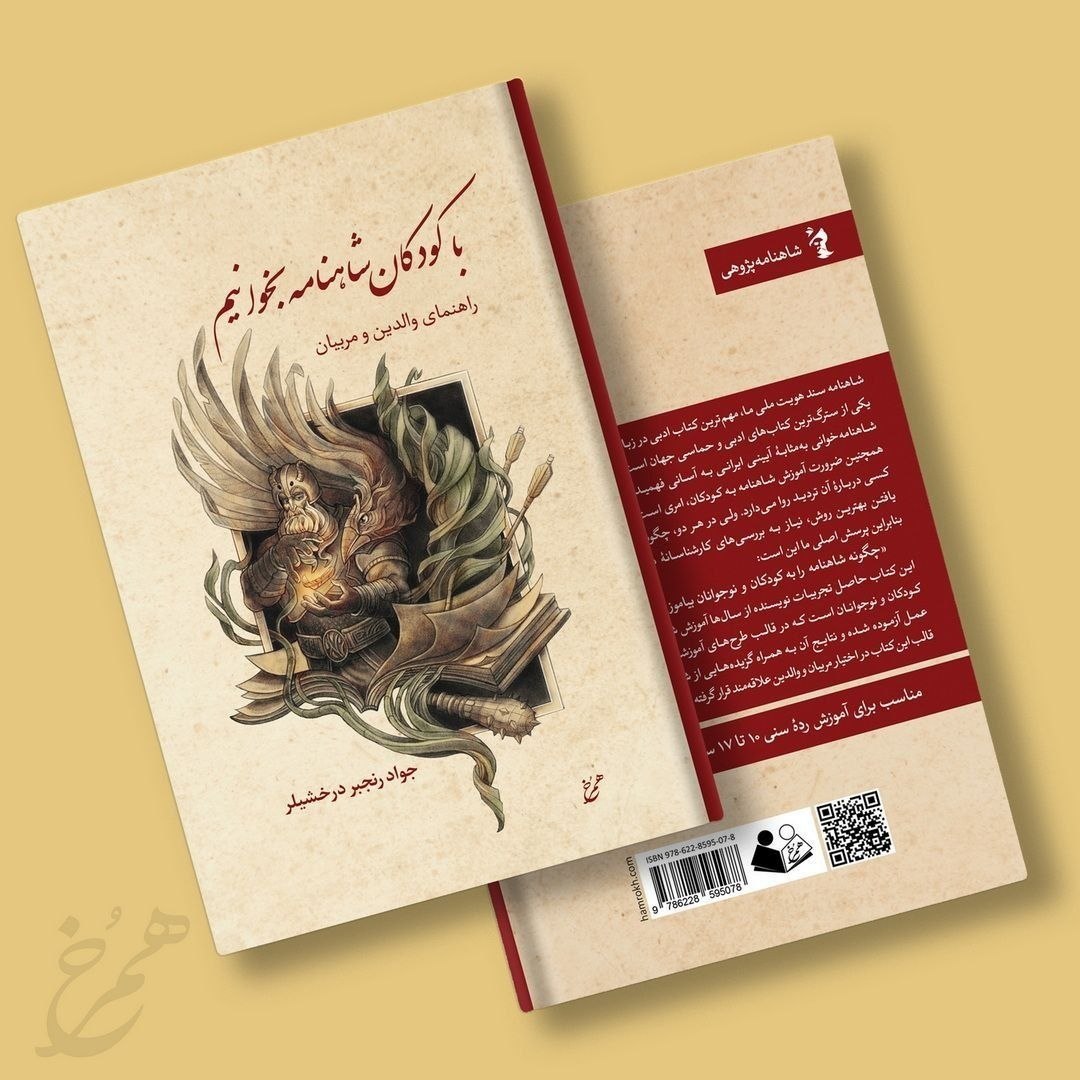 This work serves as a clear guide on how to teach the Shahnameh; it addresses both the rationale and the methodology of this process while featuring selected verses and stories tailored to the 10–17 age group |
Reading the Shahnameh with Children: A Guide for Parents and Educators by Javad Ranjbar Derakhshilar |
As part of the ongoing weekly Shahnameh reading sessions organized by the Iranology Foundation of East Azerbaijan (Tabriz), another gathering will be held featuring a recitation of excerpts from the *Kārnāmag-ī Ardašīr-ī Pābagān* (The Book of the Deeds of Ardashir, Son of Babak), presented by Dr. Leili Khabbazi—a scholar specializing in the culture and languages of ancient Persia.
Attending this gathering of wisdom serves as a celebration honoring the roots and enduring splendor of Iran's history.

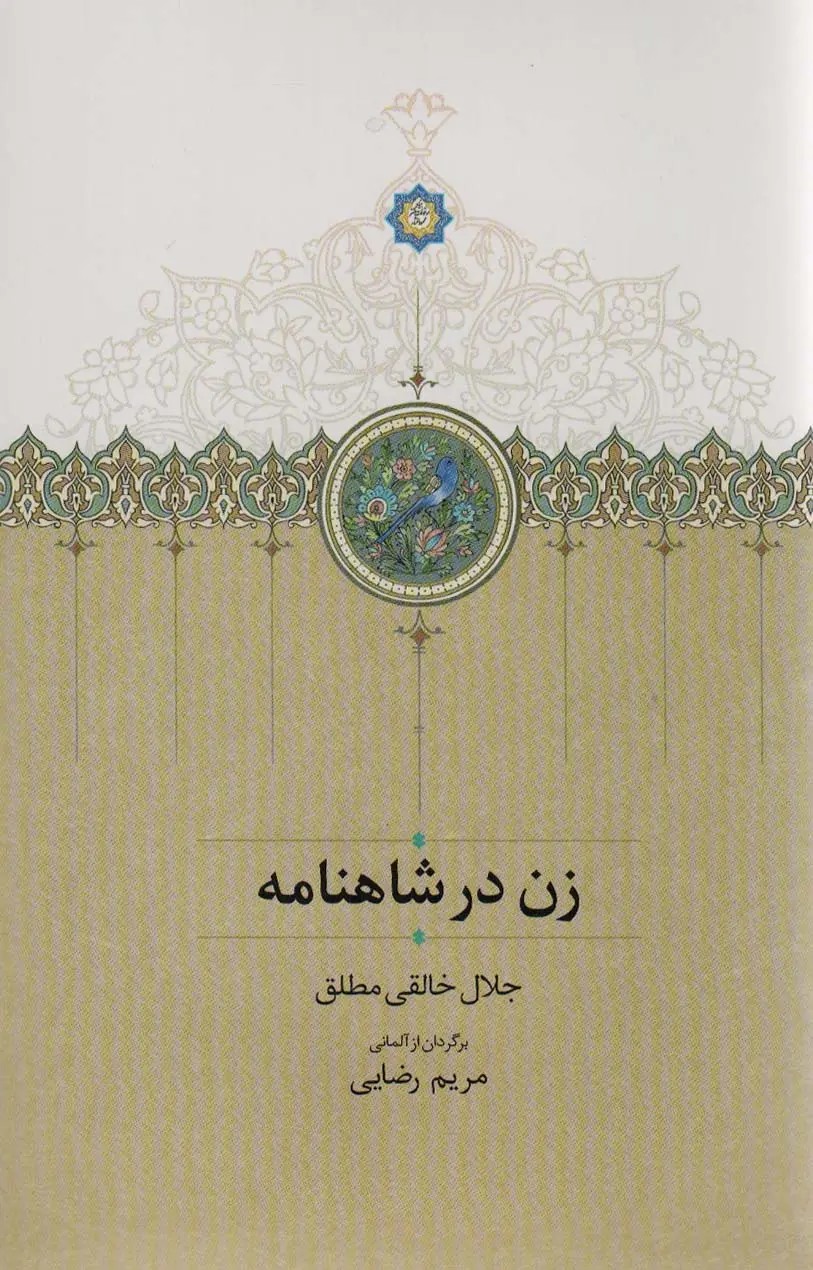
The examination of the role of women and their portrayal in the Shahnameh has long been a subject of scholarly debate—a discussion that continues to this day, alongside persistent misconceptions. Some argue that the Shahnameh reflects a misogynistic perspective, while others seek to refute this claim. The book Women in the Shahnameh is the doctoral dissertation of Jalal Khaleghi-Motlagh, originally published in German in 1970
The present translation is based on the German text, with additional notes provided by the author
 |
Documents Regarding the Turkicization of Azerbaijan / Document No. 10
Indeed, just as Anatolia became Turkic-speaking
Today, if you were to suggest to a Turkish national—or within academic circles—that the language of the country known as Turkey has been Turkic for thousands of years, you would be met with laughter! The history of the Seljuk arrival in the region and their defeat of the Byzantine (Eastern Roman) Empire—coupled with the existence of thousands of Greek inscriptions and archaeological artifacts from the glorious Greco-Roman era—is enough to convince even the most uninformed observer that Anatolia underwent a "linguistic transformation."
In Turkey, this reality is largely understood and accepted; it is acknowledged that their language originated in the steppes of Mongolia, while the people themselves are descendants of the indigenous inhabitants of Anatolia—sharing no cultural or physical resemblance to the Turkic peoples of Central Asia, save for the language they adopted.
In Iran, however, it will likely take a long time for this historical reality to gain acceptance. This is because, rather than undertaking a national project to shed light on the truth and recount historical facts, the ruling establishment—for reasons of its own (!) —has instead chosen to support Pan-Turkist movements! There are other reasons as well, which will be explained further...